Saturday, September 5, 2015

A Review of Eastern Orthodox Internet Resources

Given that Leviathan is in full battle mode against American Christians, my time is better spent trying to strengthen the brethren rather than deconstructing groups like Eastern Orthodoxy.  Please understand what I just said.  I called them "Christians."  I'm not sure given their views on the One True Church if they can return the favor, but no matter.

Here is my review of the following EO websites and the resources they offer.

Ancient Faith Radio.  Like any site with multiple programs, this is hit or miss.  Still, a lot of the material is fantastic and they branch out.

Patristic Nectar. This is Fr Josiah Trenham's ministry.  The audio quality is excellent, as is most of the material.  The only downside is the price.  More often than not, you are paying $7+ for 30 minutes of audio.

Orthodox Bridge.  I'm really trying to be nice.  I guess the best thing I can say is if you are looking for citations from St Ignatios, then this site is as good as any.  They advertise themselves as Reformed-Orthodox bridge, but it's just a one-way street.  They don't like it when you ask questions they can't answer.  My main problem is that this site sets up converts for spiritual disaster.  They make it sound like the American Orthodox church is growing steadily and Protestantism will collapse any day now.  If you convert to Orthodoxy for their reasons, you will be disappointed. There are good reasons.  They just haven't given any.

Monday, August 31, 2015

Boersma Outline Sacramental Tapestry

argument:  Until the late middle ages people looked at the world as a mystery (Boersma 21).  By mystery Boersma means a sacramental link between creation and God, that creation participates in God.  In other words, the connection, though not identical, is real.  Mystery, so Boersma reads the “Platonist-Christian synthesis” (hereafter PCs) refers to the “reality behind the appearances.”

Boersma structures his book around the (neo)Platonic movement of exitus and reditus (the departure from and return to), except exitus now refers to how the church lost the PCs and the reditus on possible steps for regaining it.

It is not Boersma’s goal to defend Platonism as such.  

Mystery
Created realities point beyond themselves (carry extra dimension to them)
Symbols just point to something else
Sacraments--the referents coinhere.

A Sacramental world not only points to God but participates in him.  
real connection, not just nominal.
The signum points to and participates in the res.
The end of created being lies beyond itself (30).

Creation and Goodness
Creation is hinged upon transcendence.
If unhooked, it loses its goodness (it has to rely on itself).
It must participate in a higher goodness.

The Platonic Heritage
  • Rejecting Parts:  
    • Creation is not automatic nor an emanation.
    • argued for resurrection of body
  • The Good

Weaving the tapestry

The Fathers’ Christological Anchor

Irenaeus
  • God reveals himself publicly in Jesus Christ to all alike.
  • The wisdom of the gospel pleads for a unity that doesn’t obliterate differences.

Athanasius:  Unity in the Incarnate Logos
  • To be made in the image of God means to be rational--Christ must teach us.  The image is restored by means of teaching (Boersma 45).
  • We are not disparate, fragmented individuals but participate in a common humanity.  
  • The unity of humanity lies anchored in the Word.

Gregory of Nyssa: Universals and Particulars
  • universals refer to what is common, particulars to what is individual.
  • Universals anchor the particulars.
  • The deity in which the Father/Son/Spirit share implies a common activity.  This is why the three men analogy--James, John, Peter--breaks down, for they all have different actions.

Theme:  Our particular humanity depends on the participation of humanity in Christ (51).

Unraveling the Tapestry: The Medieval Revolt Against Nature

  • Juridicizing the Church
    • Gregorian reform
      • For earlier fathers, sacred actions are performed in the church, but everyone is subject to God. God was directly working in the sacred actions.
    • earlier theology regarded sacramental power as within the life of the church.  Now it is causally top down.
  • Discovery of Nature
    • earlier sacramental thought held a link between heaven and earth. There was the unity of the church (res) and the sacrament to which it pointed.
    • The Berengar Dialectic
      • Berengar said we spiritually participate in the res.
      • His opponents said we physically participate in the sacramentum.
      • Both sides widened the gap between heaven and earth.
  • Scripture, Church, Tradition
    • The earlier fathers said church and Scripture coinhere. They are not two separate sources of authority.
    • Dialectic of Wyclif: Catholics responded to him by pitting Church against Scripture.
  • Nature and the Supernatural
    • The Counter-Reformation introduced the notion of “pure nature,” which meant human nature before any prior movement of grace.  Human nature is walled-off.

Cutting the Tapestry: The Two Scissors of Modernity

Univocity of Being
  • Scotus said being was used in a univocal way.   Being is now “unhooked” from God.  
  • If being now applies to God and creatures in the same way, then it has become an overarching category in which both God and creation “share” (75).
  • Sacramentum no longer receives res from God’s own being.  

Voluntas
  • God no longer relates to creation by gift, but by will.
  • The world can only relate in an “external” way.  
  • The late medieval emphasis on divine decree cut the link between God’s will and God’s knowledge (79).

Younger Evangelicals

After Late Medievalism the Reformation struggled to reweave the tapestry.  This isn’t entirely its fault.  Most of the Reformers were philosophical realists, but it’s hard to keep together what has long since been sundered.  

The Great tradition had a Christological anchor: a vertical link between God and humanity where we receive our being by participation in the Logos (89).

REDITUS: RECONNECTING THE THREADS

Eucharist as Sacramental Meal

If our connection with God is an external or nominal one, then there is little room for sacramental participation.  

De Lubac and the Eucharist

There is a real transubstantiation, but it is when the congregation is changed into the body of Christ. This leads de Lubac to posit a threefold body: the bread, the congregation, Christ.

St Paul seems to operate off this as well.

“And is not this bread [Body¹] we break a participation in the body [Body..n..] of Christ?” (1 Cor. 10:16b).

“Because there is one loaf [Body¹], we, who are many, are one body [Body²], for we all partake of one loaf [Body¹]” (1 Cor. 10:17).  

The question is what does Body...n refer to in 1 Cor. 10:16b?   It could refer to Christ himself.  It could also refer to Body².  Or as de Lubac says, it is a three-fold body so there isn’t a hard and fast separation.  

sanctorum communio: can refer to either communion of saints or communion of holy things.  Communion of holy things was related to communion of saints (115).  

The Shifting Corpus

The word verum moved from the ecclesial body [Body²] to the eucharistic body [Body¹].   “Christ’s body in the Eucharist came to be seen as the true body” (de Lubac, quoted in Boersma 117).  

The Church began to focus more on the Eucharist and less on communion within the ecclesial body.  

Friday, August 28, 2015

On the leaving of a certain Reformed forum

I won't name names because I don't want this to be a "kiss-and-tell."  I decided to leave because my theology--while remaining historically Reformed on most points, and certainly Evangelical Protestant on others--was moving away from "Vanilla Reformed."

I expected them to disagree with me on issues like the charismata and premillennialism.  That didn't bother me.  Recently, however, my theology took a Patristic and Augustinian bent.  I started drawing inferences from what the Church (and yea, even Calvin) taught about the nature of the soul.  It became clear that I had "maxed out their conceptual paradigms." I am not saying they are dumb.  Quite the opposite. I am saying they do not have the conceptual paradigms to deal with, say, Augustinian themes.


This was quite evident in a lot of questions I got.   One thread dealt with whether angels are present in church, based off Hebrews 12.  I heard:  "So, you are saying you can physically see _________?"  To which the answer is, "Of course not."  It's hard to see immaterial entities.  Most fathers (and CS Lewis) hold that when one encounters an angel (or a demon), the spirit-being manipulates matter and space and mind and causes you to be aware of its existence.  This can take physical appearance (Augustine, De Trinitate, Book II) but it doesn't have to.


This is Angelogy 101.

Regarding the charismatic gifts.  Why bother arguing?  The evidence is overwhelming and it is the testimony of global Christendom (regardless of tradition).

I wish them well but in the name of charity and peace it was best I go elsewhere.

Monday, August 24, 2015

Neckbeard News

Light-hearted humor.

http://www.neckbeard-news.com/

Thursday, August 20, 2015

Spirit beings--spirit words

I am currently reading Jennifer Leclaire's Satan's Deadly Trio.  She is one of the more articulate charismatics.  I don't always agree with her outlook, but most of her stuff is quite good and worth reading.

Admittedly, the book isn't that theologically profound--and she isn't a trained theologian.  Still, I found myself saying, "Hmmm....that just might explain some things."  For example,

Since we are spirit beings created in the image of God, our words are not just sound vibrations--our words are spirit (John 6:63).

Tuesday, August 18, 2015

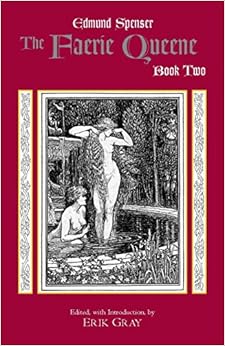
Notes on the Faerie Queene, Book 2

Here is the allegory of Temperance. It follows the standard medieval warrior pilgrimage. Sumpter has done a fine job of modernizing the spelling while retaining the exalted style. However, there are a few flaws with Sumpter's approach (I am not criticizing his work. It is literally one of a kind and preciously needed). Sumpter ignores (or doesn't notice) Spenser's Neo-Platonism. Without understanding Spenser's commitment to Neo-Platonism, parts of the story are incoherent. Here are some themes that will guide the reader.


Neo-Platonic Themes

Reason masters passions: “Yet with strong reason mastered passions frail” (VI.40). But this isn’t standard Neo-Platonism of the monkish sort. Passions aren’t bad. They just need to be guided by reason.

*Mediating Spirits. Neo-Platonism of its various forms sees a chain of being connecting all of reality. The material is suspended by the spiritual. Transcendence, therefore, can be found in the lowest link of the chain. Along this chain are mediating spirits (powers, angels, fairies).

*Because of his Neo-Platonism, Spenser sees a greater role for angels than we do today (VIII:1-2). Angels actively engage and empower man and thwart the enemy.

*It seems that Spenser identifies “Temperance” as a “god” (IX.1). Granted, he isn’t using god in the crude polytheistic sense. Rather, temperance seems to be a “power” or even “Archetype.” True, this could be merely poetic license, but given Spenser’s Neo-Platonism, it fits neatly.

*In the Bower of Bliss the heroes (Guyon and Palmer) come across a “false Genius.” If we accept that these characters (Genius et al) are Archetypes, we can then add the standard (neo)Platonic insight that the Archetypes and Forms have causal power. But we have a problem. The “Genius” here is a false Genius, as Spenser clearly argues (XII.47). So clearly this Genius isn’t the real genius, but a shadow one.

EXCURSUS: ALMA'S CASTLE

Alma's Castle in Book X illustrates how thoroughly committed to Neo-Platonism (and how familiar with the occult) Spenser was.  Sumpter isn't aware of these connections.

Sumpter misses the implication that Memory has hermetic overtones (Yates 2014).  Memory mediates a society’s passing down of Absolute Spirit (Magee 87).
Speculative Philosophy holds up a mirror (speculum) to the Idea itself: it allows the Idea to comprehend itself (88).  In fact, following the Kabbalist tradition, the “mirror” allows one to behold the deeper essence of Spirit (120).

This brings us back to the Hermetic Art of Memory.  “Imagination” is to evoke from memory the Perennial Philosophy.  In other words, to echo Jung, it draws out from within the unconscious.

This is rather speculative.  Is this what Spenser really had in mind? I think so.  Dame Frances Yates argues that Spenser “inherited much more than Neo-Platonism” (Yates 2001, 112). Spenser describes the man (representing memory) as “of infinite remembrance” (IX.52). Man is finite, not infinite--unless man himself was drawing upon a universal subsconcious.  I suggest this is what Spenser had in mind.  (Interestingly, Yates comments specifically on this very Canto; 114).

Yates further argues that the structure Spenser gives suggests that Man is a Microcosm of the universe.   In Canto 22 we read of a “circle” and a “triangle” with a “quadrate” (cube) in between.  The four-sided cube represents the four elements of the world, which is proportioned equally by “seven and nine.”  Seven is the number of the planets and nine is the angelic hierarchy.  If the cube is between seven and nine, then it is an eight, or an octave.  This could also represent the Temple of Solomon.


Conclusion:

Spenser’s work is literally the standard by which all other poetry is compared. Even though (or perhaps because of!) he is a Neo-Platonist, Spenser floods the senses (and the soul) with beauty and creates in the reader a desire not only for the good, but for the Beautiful, for the Heroic--indeed, for the Temperate.

This isn’t accidental. If what we have said about Forms/Archetypes’ having causal power, then then we can expect “pullings” upon our soul when reading Spenser.


Spenser’s most memorable creation is the Bower of Bliss (as Lewis said, no prude can read Spenser). Guyon’s actions represent a neat twist in Neo-Platonism. The most temperate action is to go into a frenzy and destroy the Bower. This isn’t what we expect from a Neo-Platonist. Spenser doesn’t negate the passions--he calls them into Reasons’s service, but all the while they remain very, very passional. Spenser may have just squared the circle: he may have just redeemed Neo-Platonism.  Guyon isn't an Anchorite who tries to transcend the realm of passions.

What about Sumpter’s annotations? They are a mixed bag. When Sumpter is explaining ethics, theology, or literary symbolism, his annotations are amazing. When he tries to be funny they are worse than awful. Remember the Ron Swanson style of humor? If you have to try hard to be funny, you aren’t. Hilarity should flow from your very being. You shouldn’t have to strain to be funny. I say that because some of the wannabe funny footnotes seriously distract from the story.

Saturday, August 15, 2015

Christian Reconstruction and Radical Orthodoxy: The Difference

A common Reconstructionist refrain is "All of life is worship," usually coupled with "No square inch."  Is all of life worship?  We'll get back to that.  The underlying theme is "no neutrality" between Christian thought and non-Christian thought.  I suppose there is some truth to that.

Radical Orthodoxy will also defy a "secular reason."  They point out--with some persuasiveness--that the secular mythos is just that--a myth, a story--that is used to buttress power.  Is this another way to say that "All of life is worship?"  I think it is.

So then:  are Radical Orthodoxy and Christian Reconstructionism saying the same thing?  Even worse, has Christian Reconstructionism suddenly become intellectually respectable and morally coherent?  Fortunately, we can answer "no" to both claims.

It is true that both groups deny a secular reason and posit the centrality of the Christian story as the only true one.  However, when Christian Reconstructionists say "all of life is worship," this is implicitly done in such a way to minimize the role of the church.  Imagine a social space in which discourse inhabits.  In this social space--on the CR claim--the church has been relegated to the margin.  Why should the church be central, since all of life is holy?  Since nature supposedly abhors a vacuum, another group will arise to mediate the Christian discourse.  That's right.  You guessed it:  The Reconstructionist Parachurch Ministry (think Chalcedon or American Vision).

This is clearly not what Radical Orthodoxy is claiming.  Radical Orthodoxy, it is true, does posit a social space in which the Christian mythos is the only one.  However, Radical Orthodoxy makes one more move:

P1: The Church is social space.
P2: Therefore, instead of "all of life is worship" we have "all of life is the Church."

I think there are some problems with the RO claim, but it is certainly a healthier claim.