Showing posts with label soul. Show all posts

Friday, August 28, 2015

On the leaving of a certain Reformed forum

I won't name names because I don't want this to be a "kiss-and-tell."  I decided to leave because my theology--while remaining historically Reformed on most points, and certainly Evangelical Protestant on others--was moving away from "Vanilla Reformed."

I expected them to disagree with me on issues like the charismata and premillennialism.  That didn't bother me.  Recently, however, my theology took a Patristic and Augustinian bent.  I started drawing inferences from what the Church (and yea, even Calvin) taught about the nature of the soul.  It became clear that I had "maxed out their conceptual paradigms." I am not saying they are dumb.  Quite the opposite. I am saying they do not have the conceptual paradigms to deal with, say, Augustinian themes.
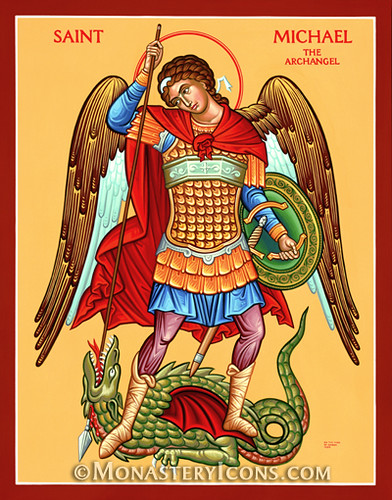


This was quite evident in a lot of questions I got.   One thread dealt with whether angels are present in church, based off Hebrews 12.  I heard:  "So, you are saying you can physically see _________?"  To which the answer is, "Of course not."  It's hard to see immaterial entities.  Most fathers (and CS Lewis) hold that when one encounters an angel (or a demon), the spirit-being manipulates matter and space and mind and causes you to be aware of its existence.  This can take physical appearance (Augustine, De Trinitate, Book II) but it doesn't have to.
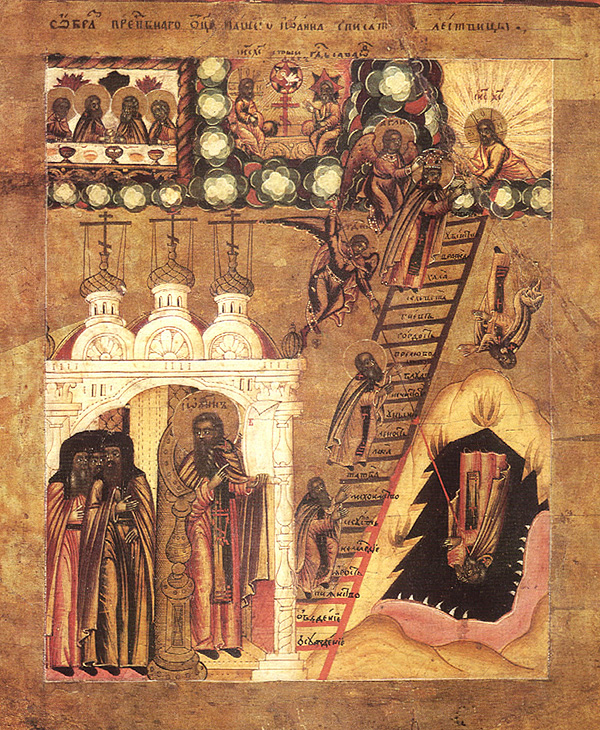


This is Angelogy 101.

Regarding the charismatic gifts.  Why bother arguing?  The evidence is overwhelming and it is the testimony of global Christendom (regardless of tradition).

I wish them well but in the name of charity and peace it was best I go elsewhere.

Thursday, August 20, 2015

Spirit beings--spirit words

I am currently reading Jennifer Leclaire's Satan's Deadly Trio.  She is one of the more articulate charismatics.  I don't always agree with her outlook, but most of her stuff is quite good and worth reading.

Admittedly, the book isn't that theologically profound--and she isn't a trained theologian.  Still, I found myself saying, "Hmmm....that just might explain some things."  For example,

Since we are spirit beings created in the image of God, our words are not just sound vibrations--our words are spirit (John 6:63).

Monday, August 3, 2015

My summary of Near Death Experiences

I debated this on Puritanboard.  The only good thing that came out of it is I got to sharpen my own thoughts.  I don't really see any future in Reformed apologetics.

You say you weren't impressed with my arguments, but my premises were all drawn from the Christian tradition, the negation of which would be heresy.  I'll restate it.

P1: Body and Soul are not the same thing (correspondingly, neither are brain and mind, which is why I didn't put immediate stock in "physical" explanations.  Physical explanations can only explain the brain, not the mind, otherwise the truth would lie with Dawkins).

P2: The soul outlives the body.  Otherwise, Jesus's parable about Lazarus and the Rich Man would be incoherent.

P3: The Christian tradition holds to immaterial entities that do not exist spatially. We call them angels or demons (and we have a natural revelation analogue: Plato's Forms, Jung's Archetypes)

P4: These entities primary mode of existence is outside the time-space continuum.  Otherwise Belinda Carlisle would be right and heaven would be a place on earth.

P5: (4) helps us understand the soul's mode of existence after death.  Either it doesn't exist, and we have heresy.  Or it exists on earth and we just committed ourselves to the next season of Ghost Hunters, or it exists "on the other side" (call it heaven or hell or hades).

P6: The key problem is that some think I have argued for a realm of existence between Death and Life called "near death experiences."  I have argued for no such thing.  I'm fine with mystery.  But I am not going to be like the Eastern Orthodox apologists I debate and start chanting "Mystery" whenever I come across facts that don't fit my paradigm.

P7: The best explanation--and I am not arguing this as dogma--is that in those "near-death" moments the veil is pulled back or the boundary is weakened.

P8: What about the "Happy Hindus?"  Or more precisely, say there is a dissolute person who sees the proverbial "bright light."  Does that mean the wicked see "heaven?"  Not necessarily.  One of the key points I argued for--and this is Van Til 101--is that facts and interpretation of facts are not the same thing.  The person is probably seeing new phenomena for which he or she has no previous way of evaluating and opts for the next closest analogue.

Sunday, July 26, 2015

Bulgakov on the Ontology of Death


  • not the annihilation of life but of a particular state of life.  If death equals complete nonbeing, then God has failed.
  • man is susceptible to death because of his ontological complexity.
  • Man is ultimately (originally) God-earth, an incarnate Godlike spirit.
  • Body and Soul and Spirit
    • Death’s dividing sickle passes between the spirit and the soul on one hand and the spirit and the body on the other.
    • The soul is an intermediate principle connecting the spirit with the creaturely world.  It is creaturely, like blood (but not blood).
    • The supraphysical energy of life (which finds it substratum in the blood) abides.
  • Death is a temporary cessation of the action of the soul upon the body.  The soul does not die but is relatively potentialized.
  • In death, an individual is separated only from his body, not his soul.
    • after death the soul abides in a supracorporeal shell, preserving some tenuous connection with spirit.
    • man was originally meant to see the spiritual world; the fall veiled that.  Flesh is separated from spirit by a wall of sensuality.
    • By tearing away man from his flesh, death opens for him the “gates of the spiritual world” (359).  This is why the dying can often see angels, demons, and appearances of departed loved ones.
    • Death divides human life into two halves
      • psychic-corporeal being (what we call “alive”)
      • spiritual-psychic body.
  • Since death is not complete nonbeing/cessation, it is necessarily a continuing of life.
  • What about the “judgment?”
    • first of all, self-consciousness and self-judgment.
    • it is not yet perfect self-knowledge, which can only happen at the final judgment with the totality of humanity (social knowing).
    • An existential self-determination follows this judgment.
  • He has an interesting take on the salvation of infants and the like:
    • First, he has already established that death is a new mode of existence.
    • Secondly, the afterlife is not a merely passive state (otherwise man is a mere object and not a knowing subject).
    • Therefore, he will live in this world with other spiritual, incorporeal beings.
    • Even the “Rich Man” in the Lazarus parable felt something new:  love towards his brothers.  Thus, there are degrees of change.
    • Acting in relation to others is an acting upon ourselves (365).
    • Thus, it seems beyond argument that the human spirit can undergo change in the afterlife.
  • The spirit is not a mere object which receives actions without inwardly transforming them.
  • Concerning the pangs of hell, the state of disincarnation after death does not admit corporeal pains.  
  • Further, since we are spirit, and spirit is freedom, it seems we would have a sort of freedom in the afterlife.

Monday, June 15, 2015

Hegel almost stumbled upon a correct anthropology

Hegel rejects Greek dualism and almost stumbles upon a biblical Hebraism.  He sees the Cartesian project as inherently mechanistic and incoherent (what connects mind and matter?  Cartesians have never really answered this).

Unfortunately, Hegel still sees the idea of a mind/soul in a body as a “dualist temptation.”  He does admit, though, that it is foreign to Greek thought (Taylor 81).  

Hegel is drawing upon Herder’s expressivism.  Thought, language, etc does not exist without a medium.  Thus for Hegel, the subject, no matter how spiritual, is necessarily embodied.  This is true up to a point, but runs into problems in two areas:  God/Geist is not embodied (at least not God the Father and the Holy Spirit, though Hegel gets around that) and the soul exists in a disembodied state after death.

Thursday, March 26, 2015

Response to Toll-Houses


This topic deals with life-after-death experiences.  True, the bible says man is appointed once to die and then the judgment, but numerous anecdotal testimonies force us to give a more coherent account of the state of the soul after death before the final judgment.  

Maximovitch writes,

Often this spiritual vision begins in the dying even before death, and while still seeing those around them and even speaking with them, they see what others do not see.

So far, so good.  This corroborates other experiences.

He further notes,

But when it leaves the body, the soul finds itself among other spirits, good and bad. Usually it inclines toward those which are more akin to it in spirit, and if while in the body it was under the influence of certain ones, it will remain in dependence upon them when it leaves the body, however unpleasant they may turn out to be upon encountering them.

Leaving aside the lack of Scriptural (or even Patristic) evidence, I don’t have a huge problem with this statement.  

For the course of two days the soul enjoys relative freedom and can visit places on earth which were dear to it, but on the third day it moves into other spheres. [3] At this time (the third day), it passes through legions of evil spirits which obstruct its path and accuse it of various sins, to which they themselves had tempted it.

This is a dangerous teaching because there isn’t a word about the Power of Jesus breaking sin in my life, or the Spirit’s being a downpayment, or that we are upon death made perfect in holiness (Hebr. 12:23).

According to various revelations there are twenty such obstacles, the so-called "toll-houses," at each of which one or another form of sin is tested; after passing through one the soul comes upon the next one, and only after successfully passing through all of them can the soul continue its path without being immediately cast into gehenna. How terrible these demons and their toll-houses are may be seen in the fact that Mother of God Herself, when informed by the Archangel Gabriel of Her approaching death, answering her prayer, the Lord Jesus Christ Himself appeared from heaven to receive the soul of His Most Pure Mother and conduct it to heaven. Terrible indeed is the third day for the soul of the departed, and for this reason it especially needs prayers then for itself.

What is most terrible is that Jesus doesn’t seem strong enough or too interested to do anything to help.  I would hate to think that Jesus wasn’t good enough, that his cross wasn’t strong enough to save me, but rather the final instance of my getting into heaven has to do with enough people praying for me at the right moment. Further, what are these “various revelations?”  He gives a list of fathers but no references that we may check them.

But someone might say, "Jacob, you are a continuationist. How can you reject or falsify these claims to continuing revelation?" First of all, modern-day prophecy does not introduce new doctrine, which is precisely what the above claims are doing.

Then, having successfully passed through the toll-houses and bowed down before God, the soul for the course of 37 more days visits the heavenly habitations and the abysses of hell, not knowing yet where it will remain, and only on the fortieth day is its place appointed until the resurrection of the dead.

If this is true, not knowing where the soul will be, then how could Paul confidently state that he would be with Christ upon death? I think that decisively refutes the above anecdote that Mary had to pray to Jesus to make it past the toll-houses.

On the other hand, given that I don’t think heaven and hell are geo-spatial realities per se, I have no problem saying that the soul can “roam various spheres.”  Of course, we have no evidence for such a claim but I see no real theological problem with it.

To be fair, not all EO accept toll-houses, but a large and legitimate expression of certain traditions within EO do. Further, toll-houses seem to corroborate the larger EO mentality regarding an utter lack of confidence in Christ's finished work and my final salvation.