Tuesday, January 13, 2015

But the King of Sweden stood his ground

There.  Then.  At that moment.
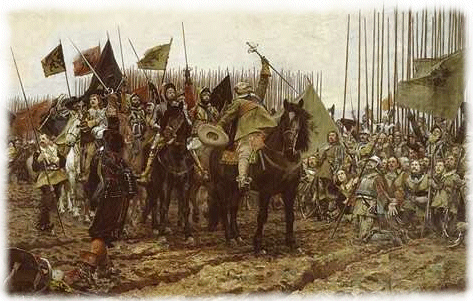
The Father of Modern Warfare Gustavus certainly was not, but he may have very well been the Father of the Modern World.  Because then at that place, at that moment when the Saxons broke and the Inquisition bade fair to triumph over all of Europe, the King of Sweden stood his ground.


And proved, once again, that the truth of history is always concrete.  Abstractions are the stuff of argument.  Whatever might have been was not.  Not because of tactics or formation or artillery…but because of a simple truth.  At that instant history pivoted on the soul of one man.  His name was Gustavus Adolphus, and there were among his followers who thought him the only monarch in Europe worthy of the name.   They were right, and the man was about to prove it.  For one of the few times in human history, royalty was not a lie.

The above is taken from Eric Flint’s 1632.   It’s a highly fictionalized account, but magnificent nonetheless.  Had Gustavus faltered that day, the entire continent would have been plunged under the Inquisition.   England was borderline papist under Charles I, and with the tremendous pressure from an entire continent, it’s doubtful she could have long resisted.

Theologia Unionis as Epistemological Prism

The Christological problem follows the [epistemological issue]:  if the human nature of Jesus, as finite, is in capable in itself of comprehending the infinite knowledge of the theologia archetypa[think of the simple divine mind, admitting no real distinctions], then any equation of the theologia unionis [for our present purpose, think the communication of attributes; BH] with archetypal theology must involve some alteration of the human nature of Jesus.  For Jesus to be possessed of an infinite divine wisdom according to his humanity, there would have to be either a communication of divinity to humanity or a transference of divine attributes to Jesus’ humanity within the hypostatic union (Muller, PRRD I: 250]
The point is this:  If Christ in his incarnation didn’t exhaustive knowledge, then how can  we expect fallen sinful man to have it?   If you do not accept this point, then you will doom yourself to deadly spiritual models that can only cause theological insanity.  You will end up asking questions like,
  1. If there is no infallible speaking church/pope, then how can I have certainty about anything?
  2. How do I know which books are in the canon?
  3. How do I know I am elect?
All of these questions, pursued in a false context of Illegitimate Religious Certainty, are spiritual death.

Monday, January 12, 2015

You Might Be a Hyper Preterist if...

This is from Paul Manata back in the day

1. When you hurt your back playing golf and your buddies look at you and say, "you got a bum glorified body, didn't you?," you might be a hyper-preterist.

2. If after lusting after a Playboy Playmate you go and teach that we were definitively sanctified in 70 AD, you might be a hyper-preterist.

3. If you say you take the time texts seriously but you don't hold that 1 John was written at 11:00 p.m. on 69 AD since it says, "we know it is the last hour" (1 John 2:18), you might be a hyper-preterist.

4. If you say that people weren't regenerate until 70 AD but it was already not yet, and then you read passages which speak of the saints loving God and his law (which the unregenerate cannot do), you might be a hyper-preterist.

5. If you think 70 AD was the most important event in history, rather than the cross, you might be a hyper-preterist.

6. If you have Gnostic tendencies, you might be a hyper-preterist.

7. If you've never read Calvin, Hodge, Warfield, Edwards, Turretin, Witsius, Owen, Murray, Van Til, Vos, et al, you might be a hyper-preterist.

8. If you've read them, and the every other Christian position on the resurrection and the second advent, and you say they're all wrong and you're all correct, you might be a hyper-preterist.

9. If you think you're reformed and hold that God has elected a certain number of people to everlasting life, but yet you think the earth will last forever with people entering into the city, for eternity, you might be a hyper-preterist.

10. If you have a blank look on your face, with glassy eyes, you might be a hyper-preterist.

11. If your family members need to hire people to "get you out," you might be a hyper-preterist.

12. If your position leads to the position that Jesus needed regeneration since he was resurrected, you might be a hyper-preterist.

13. If you get kicked out of every church you go to, you might be a hyper-preterist.

14. If your creed is that you have no creed, you might be a hyper-preterist.

15. If you say that "the end of ALL things is at hand" (1 Peter 4:7) means ALL things, but the fulfillment of EVERY vision without delay (Ez. 12:21-28) does not mean EVERY vision, you might be a hyper-preterist.

16. If your teaching is gangrenous, you might be a hyper-preterist.

17. If you still take the lord's supper even though one reason it was to be taken was in order to "proclaim His death until He comes," you might be a hyper-preterist.

18. If you constantly bombard people with e-mails, you might be a hyper-preterist.

19. If your previous theological bents have been other heretical positions (i.e., the Church of Christ's), you might be a hyper-preterist.

20. If you make yourself feel better by saying, at one time people thought the reformers were heretics, you might be a hyper-preterist.

21. If your two favorite sayings are: (1)Reformed and always reforming and (2) sola scriptura, even though you misrepresent what those mean, you might be a hyper-preterist.

22. If you live in Florida, you might be a hyper-preterist.

23. If you're a fan of "New Covenant Theology," you might be a hyper-preterist.

24. If you think Jesus will kick it with Enoch and Elijah for eternity while the rest of us will float around as disembodied spirits after we phsyically die, you might be a hyper-preterist.

25. If you think that we'll still sin after we die since definitive sanctification has already occurred, you might be a hyper-preterist.

26. If you think that God will live in eternity with active sinners, forever, you might be a hyper-preterist.

27. If you have no education, you might be a hyper-preterist.

28. If you only focus on eschatology, you might be a hyper-preterist.

29. If you can't get off the milk and chew some meat, you might be a hyper-preterist.

30. If you deny Christ's full work of redemption (e.g., the phsyical He made good also needs redemption), you might be a hyper-preterist.

31. If you think that Don Preston "is the man" because he rambles off basic two-premiss syllogisms, you might be a hyper-preterist.

32. If this is the new heavens and earth and you have your glorified body, and upon realizing this if you're not depressed and feeling cheated, you might be a hyper-preterist.

33. If you've had to define what a Christian is and this definition lets just about any wacko into the camp, you might be a hyper-preterist.

Sunday, January 11, 2015

Reformed Scholastic Eschatology

Summarized from Richard Muller's Dictionary of Latin and Greek Theological Terms.

I suppose as good a starting point as any would be the dius novissimus, the last day, the adventus Christi.  Here the Reformed Scholastics (excepting men like William Twisse) would also place the resurrection and Last Judgment.  As a historic premillennialist myself, I would have a few questions, but moving on...

While speculation of the last times is fruitless, the Bible does urge the wise steward to be ready, which implies some awareness of the times.  Thus, the Reformed Scholastics would speak of the signa dei novissimi, signs of the last day.  These signs can be further delineated:
  • signa remota:  opening of the first six of the seven seals of Revelation 6:1-17: wars, famine, conflicts, pestilence, earthquakes.
  • signa propinqua:  signs nearer the end; the Great Apostasy; worldliness in the church.  Covenanted church members forsaking the church as the center of the kingdom.
  • signa propinquiora:  political unrest; regathering the nation of Israel; increased lawlessness.
  • signa proxima:  political disruption from the full manifestation of the Beast (Revelation 13-17); fulfillment of mission to the gentiles.
A note on Antichrist

Antichristus:  arises from within the church and is against the church.
  1.  he will sit in templo Dei
  2. he will rule as head of the church
  3. he will exalt himself above the True God
  4. He will cause many to fall away from the church.
  5. He will have "lying wonders."

Essence-Energies Rebutted

An alternative reading of the so-called Western doctrine of God is the essence/energies distinction made famous by Gregory Palamas.  It posits that we cannot know God in his simple essence, but we can know him by his energies (or operations).  Hints of this doctrine are found in the Cappadocians and Maximos (though I deny they are saying exactly the same thing as Gregory).  The doctrine has an initial appeal.   Admittedly in our prayer lives, we do not pray to “essence itself,” but to the persons of the Trinity.   It also appears that we do know God by his actions towards us, and not by transcending to the essence.  So this means the distinction is correct, right?  If this is the only alternative to the Thomistic doctrine of absolute divine simplicity (e.g., person = relation =essence; person = essence!), then how can we avoid not assenting to it?

Some form of the doctrine might in fact be correct, but even when I was gung-ho for anchoretism, a number of questions kept coming up.
  1. Is it true that the Thomistic model of divine simplicity is the only choice for Western doctrines of God?  I simply deny this to be the case.  I think it is disputed that even Augustine held to a form of this.
  2. While it’s true that we know God by his actions toward us, can the “energies” model really account for all biblical data?   Even Orthodox theologians note this difficulty.   Vladimir Moss, in rebuttal to Fr John Romanides writes, “Do the Scriptures speak of our having an energetic relationship with God or a personal relationship with God?”
  3. It is true that God relates to us by our actions, but as Gunton notes (Act & Being), when Scripture uses these concepts it does so around terms like providence, Incarnation, and covenant.  When the fathers use these terms they usually mean the peri ton theon (things around the godhead) or the divine logoi (think eternal forms).
Technical critiques of the doctrine:

Orthodox philosopher David Bradshaw writes, ““Somehow by energeia Gregory and Basil would appear to understand both that which God is, and that which God performs. … Basil and Gregory in their turn revise Plotinus by rejecting the distinction of hypostasis between Intellect and the One.  For them the relevant distinction is rather that between God as he exists within himself and is known only to himself, and God as he manifests himself to others.  The former is the divine ousia, the latter the divine energies.  It is important to note that both are God, but differently conceived:  God as unknowable and as knowable, as wholly beyond us and as within our reach.”

In other words, God’s energies are ad extra, outside the Godhead.  They relate to creation.   This raises a troubling point, as Olivianus has noted, “if there were no creation would God’s nature be the same? On the Eastern view, no. On said view, in order for God to have the nature he does he must create. Thus creation is a necessity of nature.”  Remember, in some sense the “energies” are part of who God is--but they only relate to God's works ad extra.  All Christian traditions believe that God’s essence is stable and unchanging.  God would be God regardless of creation.  However, God’s energies only relate to creation (God’s manifesting himself to others).  So here we have a disjunction between God ad intra and God ad extra.  The only way out of his is to posit a necessary creation, which few traditional theologians are willing to do.

Addendum: Vladimir Moss’s extended critique:

Moss is one of the outlaw theologians of the Orthodox Church.  He is a Western convert to a catacomb branch of the Russian Orthodox Church.  (When the Moscow Patriarchate surrendered to the Bolsheviks, a number of Orthodox believers rightly resisted and went underground, forming denominations–I know they hate that word–like ROCOR and ROCA.  Most of these denominations have since rejoined the MP.  Moss’s has not).   Moss’s theological project is odd, but in many ways it is quite helpful.   He does not have rose-colored Tsarist-Holy Serbia glasses.  He honestly points out problems in current Orthodox theology, historiography, and practice.  His comments on topics like substitutionary atonement, theosis, and original sin are very helpful, surprisingly.

Fr John Romanides in some ways resurrected the theological project of Gregory Palamas. In his works one will note a strong antipathy towards anything Western:  substitution, original sin, AUGUSTINE, etc.  While Romanides has a clear manner of writing, it appears that he often overshoots his target.  While he makes many good points, his method precludes a number of valuable insights in Christian theology.  Moss realizes this and responds accordingly.  In its starkest form, the essence-energies distinction, most starkly represented by Romanides, adopts the Dionysian hyper-ousia (God is beyond being) of which we cannot know, but he reveals himself in his energies, which we can know.  The following are Moss’s glosses:

Romanides:  “ The relationship between God and man is not a personal relationship and it is also not a subject-object relationship. So when we speak about a personal relationship between God and man, we are making a mistake. That kind of relationship between God and human beings does not exist…The relations between God and man are not like the relations between fellow human beings. Why? Because we are not on the same level or in the same business with God.”

Moss: But God came down to our level in the Incarnation (this is precisely the same point Gunton makes against Dionysius).  What reason could Romanides have for denying that God is a Person(s) and that our relationship with Him is personal? The present writer can only speculate here, but the answer may lie in Romanides’ obsession with the distinction between the Essence and the Energies of God, according to which God is unknowable in His Essence, but knowable in His Essence. Now this is a valid and very important distinction, but Romanides abuses it as often as he uses it correctly. It would be an abuse, for example, to say that since God can only be known through His Energies, our relationship with Him can only be “energetic”, not personal. For Who is known through His Energies? Is it not the Father, the Son and the Holy Spirit – that is, the Persons of the Holy Trinity? So our relationship with God is both “energetic” and personal: we know the Persons of God through His Energies. For, as St. Paul says, God has “shone in our hearts to give the light of the knowledge of the glory of God [His Energies] in the face of Jesus Christ [His Person]” (II Corinthians 4.6).

Romanides:  “No similarity whatsoever exists between the uncreated and the created, or between God and creation. This also means that no analogy, correlation, or comparison can be made between them. This implies that we cannot use created things as a means for knowing the uncreated God or His energy.”

Moss: But this immediately raises the objection: if there is no similarity whatsoever between God and His creation, why, when He created man, did He create Him in His “image and likeness”? And again: is not this likeness between God and man precisely the basis which makes possible the union between God and man, and man’s deification?

Me:  This touches on the analogia entis, which most Protestants reject in its Romanist form.  I had never realized Moss’s point before. I offer a hearty amen.

Addendum:
 

Saturday, January 10, 2015

Creeping Cultism

I recently shared a paper on epistemology to some Reconstructionists and Van Tillians.  I did not see myself as attacking Van Til, yet merely asking some technical questions on philosophy.  I thought I saw a weakness in a specific argument Greg Bahnsen made.  Mind you, I wasn't saying Bahnsen was wrong (in the broadest sketches I think he was on to something), but merely saying that one aspect is faulty, but if that aspect is fixed then the argument can probably be salvaged.

The response was ugly.   That shouldn't be surprising, since Recons really haven't done much in scholarship beyond the middle days of Gentry and Demar, and those two only wrote on two or three topics at most.  I suggested around this time last year that Christian reconstructionism was down for the count after the Doug Phillips sex scandal.   While Phillips himself wasn't much of a thinker and didn't offer any scholarship, he at least advanced Recon thought on a wide level.

Back to the paper.  Long story short, I was using several highly specific philosophy terms.  There is nothing intrinsically holy about those terms. It's just the current usage in philosophy.  These guys at this Facebook page didn't bother to understand these terms and merely started chanting reconstructionist slogans to each other.

One of these slogans was the Transcendental Argument for the Existence of God (TAG).  It says in order to know anything, you must presuppose God.  That's fine and that wasn't my beef.  My problem was that if we try to tie this to internalist models of epistemology, then the argument runs into problems (and there are HUGE problems with the argument beyond what I have given).

Yet these gentlemen seemingly identified their formulation of the argument with the argument itself, which meant any questioning of their formulation was a questioning of the argument.  And if the argument, so they perceived, seemed to fail, then all hope of knowledge was lost.

Of course, I had no such intention, but their reaction was quite telling and it is what you see in a lot of cults.  A questioning of one aspect of a beloved leader = criticism of Our Glorious Leader.

Which is a shame, since I love Greg Bahnsen.  But it gets worse.  The nature of the TAG argument is that without it knowledge is impossible.

Sadly, it gets worse than that.  They could not tolerate any deviation from the "formula."  Whenever the words of a theory become sacrosanct and beyond challenge, what you have is idolatry in its crudest form.

Friday, January 9, 2015

A light-hearted jest at TAG

I posted a reflection a small aspect of Van Tillian thought at a Reconstructionist page on facebook.  I wasn't even criticizing Van Til, but asking an epistemological question.  The firestorm that followed was....well...quite believable, actually.  As a general rule Reconstructionists do not read outside their fields and haven't discussed anything new in two decades.  Once they realized they were simply over their heads philosophically, the more abrasive ones backed off.

But I thought this should be fun.   The Transcendental Argument says if you don't presuppose the existence of God, knowledge is consistently impossible. I am not going to actually address that point.  A number of guys have offered devastating refutations of TAG (e.g., it proves Fristianity, the truth of the Pope, etc) The catch-phrase is this, The truth of the Christian Faith is the impossibility of the contrary.

Major Premise:  Jesus said with God all things are possible.
Minor Premise:  The contrary is a thing.
Conclusion:  The Contrary is possible.

Relax, it's a joke.